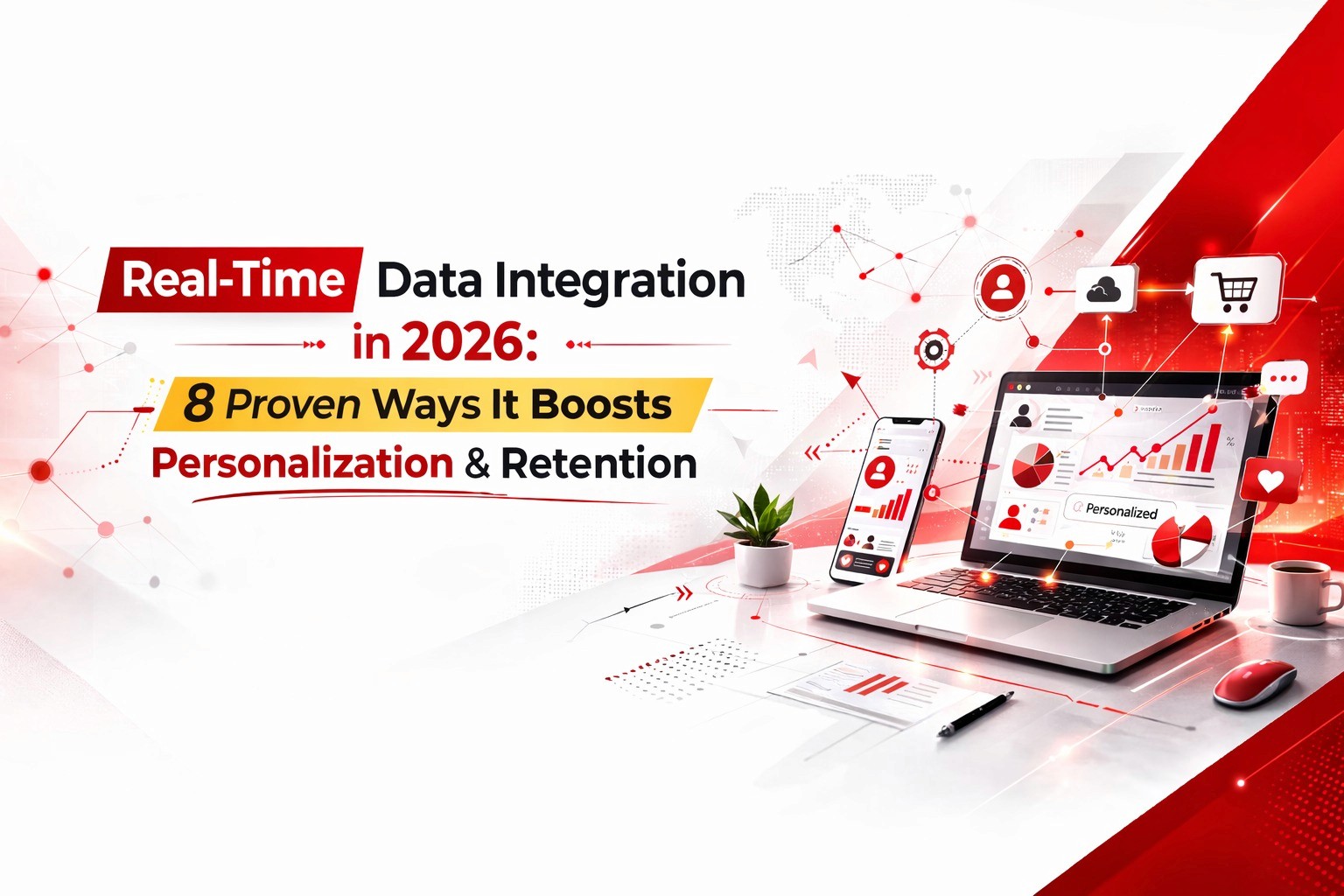
Real-Time Data Boosts Retention in 2026
Blog
Personalization + Retention in the Age of Instant Expectations
Real-time data integration increases personalization, reduces churn by 15–20%, and boosts revenue 6–10% when implemented strategically.Customer expectations have changed dramatically. Today’s consumers expect brands to understand their needs, respond instantly, and deliver seamless experiences across every touchpoint. In Scotia Swift Real-time data integration is the process of collecting, processing, and activating customer data instantly across multiple systems to enable immediate personalization and decision-making.
According to Salesforce’s State of the Connected Customer Report (2024), 73% of customers expect companies to understand their unique needs, and 65% expect experiences to adapt in real time.
This shift has made real-time data integration a strategic necessity rather than a technical upgrade. Businesses that can collect, process, and act on data the moment it is generated gain a powerful advantage in personalization and customer retention.
Did You Know?
73% of customers expect brands to understand their needs.
80% are more likely to buy from personalized brands.
5% increase in retention can boost profits by up to 95%.
Want to implement real-time personalization in your SaaS product?
Get a Free Strategy Consultation
How Canadian SaaS Companies Can Use Real-Time Data
In Canada, SaaS companies can gain a competitive advantage by leveraging real-time data to make faster, smarter decisions. By analyzing live user behavior, system performance, and customer interactions, businesses can personalize user experiences, detect security threats instantly, reduce churn, and optimize pricing strategies. For example, SaaS firms operating under regulations like Personal Information Protection and Electronic Documents Act (PIPEDA) can use real-time monitoring to ensure data compliance and quickly respond to potential breaches. Ultimately, real-time analytics helps Canadian SaaS companies improve operational efficiency, increase customer satisfaction, and drive sustainable revenue growth.
What Is Real-Time Data Integration?
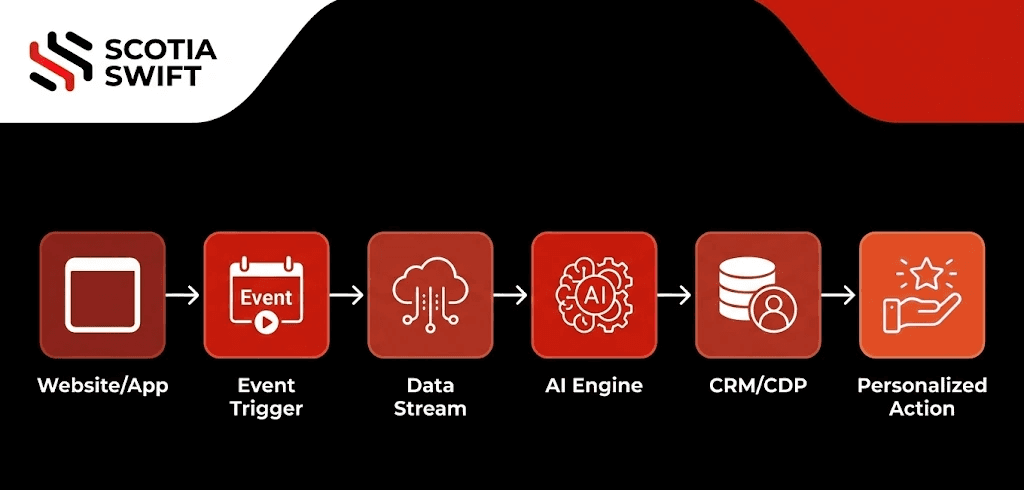
Real-time data integration refers to the process of collecting data from multiple sources — websites, mobile apps, CRMs, support systems, and transaction platforms — and making it instantly available for analysis and action.
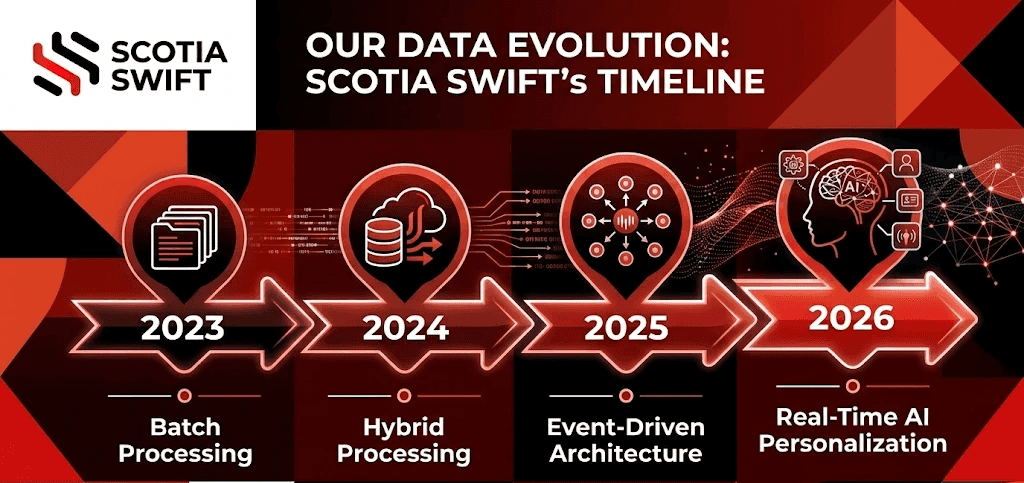
Unlike traditional batch processing, where data updates happen every few hours or days, real-time systems process customer behavior as it occurs.Gartner predicts that by 2026, a majority of enterprises will rely on streaming data architectures as part of their digital transformation strategy
Why Real-Time Personalization Matters
Personalization is no longer optional. Epsilon research shows that 80% of consumers are more likely to purchase from brands that offer personalized experiences. However, personalization based on outdated data fails to deliver meaningful impact.
Real-time data changes that.
1. Dynamic Customer Profiles
Every click, search, purchase, or interaction instantly updates the customer profile. If a customer browses running shoes, abandons a cart, or contacts support, the system reflects that activity immediately.
This allows brands to send relevant offers, recommend complementary products, or adjust messaging in real time.
2. Omnichannel Consistency
Customers frequently switch between mobile apps, websites, social media, and email. Real-time integration ensures every channel accesses the same updated profile.
Aberdeen research indicates that companies with strong omnichannel engagement retain 89% of customers, compared to 33% for weaker strategies.
3. Predictive Personalization
Real-time AI models analyze behavior patterns to anticipate future actions. McKinsey reports that advanced personalization can increase revenue by 6–10% and significantly improve marketing efficiency.
Instead of reacting to customers, brands can proactively deliver the “next best offer” before the customer even searches.
Batch System | Real-Time System |
Data updated hourly/daily | Data updated instantly |
Delayed personalization | Immediate personalization |
Reactive strategy | Proactive strategy |
Slower decisions | Instant decisions |
The Direct Impact on Customer Retention
Retention drives long-term profitability. Bain & Company research shows that increasing customer retention by just 5% can boost profits by 25% to 95%.
Real-time data integration directly supports retention in several ways:
Proactive Support
If a system detects repeated checkout failures or negative sentiment in a chat interaction, it can trigger live assistance instantly. Zendesk reports that 70% of customers expect support agents to have full context of previous interactions.
Churn Prediction
Advanced analytics can detect early warning signs of churn, such as reduced engagement or declining purchase frequency. Forrester estimates that companies using predictive churn models improve retention by 15–20% on average.
Adaptive Loyalty Programs
Instead of static rewards, real-time systems allow brands to deliver instant incentives based on current behavior — increasing emotional engagement and brand affinity.
Industry Applications
eCommerce
With average cart abandonment rates hovering around 70% (Baymard Institute), real-time recovery campaigns represent a major revenue opportunity. Immediate personalized reminders or limited-time offers significantly improve conversion rates.
Banking & FinTech
Real-time fraud detection systems analyze transactions within milliseconds, reducing financial losses and strengthening customer trust.
Media & Streaming
Streaming platforms rely heavily on real-time recommendation engines. Personalized content suggestions help reduce churn and increase engagement time.
Telecom & SaaS
Usage-based recommendations and customer health scoring models help identify dissatisfaction early, allowing proactive retention campaigns.
Strategy | Engagement | Retention | Revenue |
Real-Time Offers | High | Medium | High |
Predictive Churn Alerts | Medium | High | High |
Omnichannel Sync | High | High | High |
Want to Reduce Churn by 20% Using Real-Time Data?
Get Your Free Retention Strategy Plan
Key Technologies Enabling Real-Time Experiences
Modern real-time ecosystems typically include:
Real Time Databases
AI And Machine Learning Modals
Cloud Native Infrastructure
Customer Data Platforms
Event Streaming Platforms (e.g Kafka)
Flexera’s 2024 cloud report highlights that most enterprises now operate multi-cloud strategies, enabling scalable real-time architectures.
Recent Trends (2025–2026)
1. Event-Driven Architecture
Organizations are shifting from batch systems to event-driven models where every customer interaction becomes a trigger for action.
2. Real-Time AI & Generative Personalization
Generative AI is now integrated into marketing platforms, enabling instant content customization, automated responses, and intelligent recommendations.
3. Advanced Customer Data Platforms (CDPs)
Modern CDPs unify zero-party, first-party, and behavioral data into continuously updated customer profiles.
4. Edge Computing
Edge infrastructure reduces latency, delivering ultra-fast personalization for mobile and IoT-driven experiences.
Business Benefits
When implemented effectively, real-time data integration delivers measurable outcomes:
PwC research reveals that 32% of customers will leave a brand after just one bad experience, highlighting the importance of responsive and intelligent systems.
Implementation Best Practices
Start with clear personalization and retention KPIs.
Identify and unify critical data sources.
Invest in scalable, cloud-native streaming infrastructure.
Deploy predictive analytics and AI models.
Ensure strong data governance and privacy compliance.
Continuously measure performance improvements.
FAQ
1. What is real-time data integration?
Real-time data integration is the process of collecting and activating customer data instantly across systems to enable immediate personalization and decision-making.
2. How does real-time personalization work?
Real-time personalization analyzes live customer behavior and instantly delivers relevant content, offers, or experiences across channels.
3.What technologies are used for streaming data?
Streaming data systems typically use event-driven architectures, real-time databases, AI models, and cloud-based data platforms.
4. Is real-time integration expensive?
Costs vary based on infrastructure and scale, but cloud-native solutions make real-time integration increasingly accessible and scalable.
5.How does it improve customer retention? Real-time integration improves retention by delivering timely, relevant interactions and proactively addressing customer needs before churn occurs.
Conclusion
Real-time data integration is transforming customer experience from reactive engagement to proactive relationship-building.
Backed by data from McKinsey, Bain, PwC, and Salesforce, the message is clear: organizations that leverage real-time insights outperform competitors in personalization, retention, and revenue growth.
In an era where customers expect speed, relevance, and seamless interaction, real-time data integration is the foundation of modern customer experience strategy.
Let’s build intelligent, real-time digital experiences for your customers.
Ready to future-proof your SaaS platform in Canada?
Scotia Swift
Website | Instagram | Facebook | Whatsapp |
Book Your Free Architecture Strategy Call