Top App Development Trends in Canada 2026
Blog
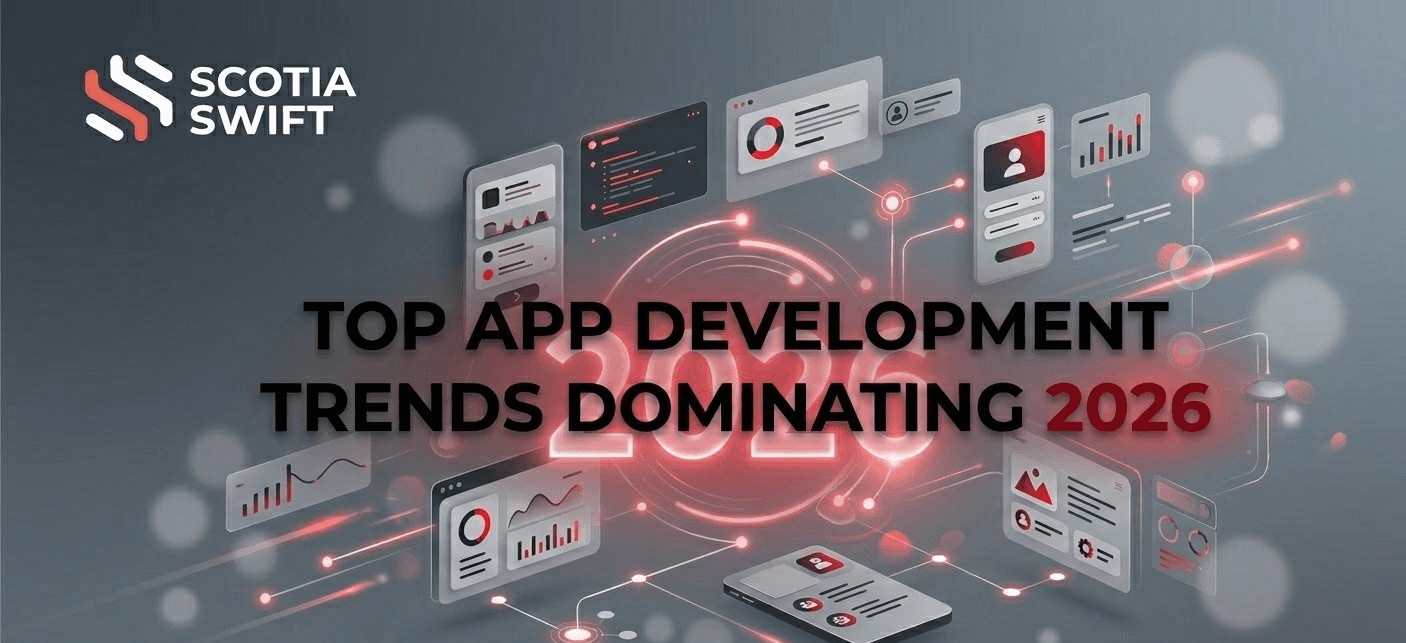
The mobile and web application landscape in 2026 looks dramatically different from even three years ago. Businesses are no longer building apps simply to “have a presence.” Today’s applications must be intelligent, immersive, secure, and capable of operating in real-time across distributed environments.
In Soctia Swift From AI-powered personalization to blockchain-enabled trust systems, and from immersive AR/VR experiences to edge computing performance optimization, modern app development is driven by advanced technologies that directly impact business growth, user engagement, and operational scalability.
Did You Know?
|
For companies investing in digital transformation, understanding these dominant app development trends is essential for staying competitive, increasing ROI, and future-proofing technology infrastructure.
This comprehensive guide explores the top app development trends shaping 2026 and how smart businesses are leveraging them for measurable impact.
Planning to build a future-ready app?
Start App Strategy
What Is Modern App Development?
Modern app development refers to building intelligent, scalable, cloud-native applications using AI, blockchain, AR/VR, and edge computing technologies.
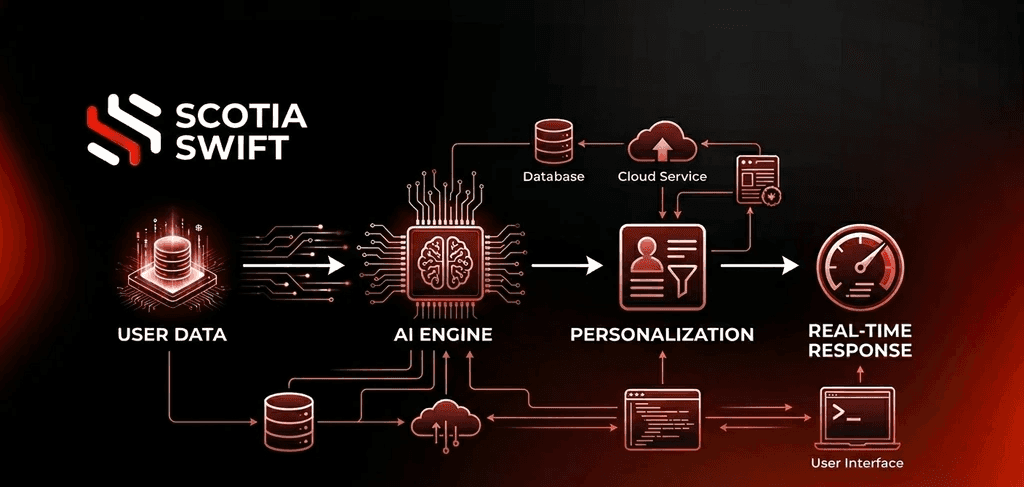
How AI in App Development Increases ROI
1. Artificial Intelligence as the Core of Modern Applications
Artificial Intelligence (AI) is no longer an add-on feature — it is becoming the foundation of modern app architecture.
1.1 AI-Powered Personalization
Users now expect applications to understand their behavior, preferences, and intent. AI enables:
· Dynamic content recommendations
· Personalized dashboards
· Predictive product suggestions
· Behavior-based notifications
· Smart user segmentation
Applications that adapt to users in real time significantly improve engagement and retention rates.
Market Insight: AI in App Development
AI software market projected to exceed $1.5 trillion by 2030.
75% of mobile apps will use AI-driven personalization.
Businesses report 20–30% revenue lift from AI personalization.
1.2 Generative AI in App Workflows
Generative AI tools are embedded directly into apps to automate complex processes such as:
· Content generation
· Customer support responses
· Automated reporting
· Code suggestions within development platforms
This dramatically improves productivity while reducing operational costs.
1.3 AI-Driven Automation & Predictive Analytics
Modern apps now incorporate predictive intelligence to:
· Forecast user churn
· Predict sales trends
· Detect fraud in real time
· Optimize logistics and supply chains
Predictive analytics enables proactive decision-making rather than reactive management.
1.4 AI Chatbots & Conversational Interfaces
Conversational AI has matured significantly in 2026. Intelligent virtual assistants now provide:
· Context-aware responses
· Multi-language support
· Sentiment analysis
· Seamless escalation to human agents
This enhances customer support while lowering service costs.
Want AI-powered features in your next app?
2.Blockchain App Features for Enterprise Security
Blockchain technology is no longer confined to cryptocurrency platforms. It has become a strategic feature in enterprise and consumer applications alike.
2.1 Enhanced Security & Data Integrity
Blockchain offers decentralized data validation, making applications more secure against tampering and fraud. Key benefits include:
· Immutable transaction records
· Transparent audit trails
· Reduced cyberattack risks
· Stronger identity verification systems
Security is now a primary differentiator in app development.
2.2 Smart Contracts in Business Applications
Smart contracts automate agreements without intermediaries. Applications use them for:
· Automated payments
· Digital asset transfers
· Supply chain verification
· Subscription management
This reduces manual intervention and increases operational efficiency.
2.3 Decentralized Applications (dApps)
Decentralized apps are gaining traction in finance, gaming, and digital ownership ecosystems. These apps provide:
· Peer-to-peer transactions
· Tokenized ecosystems
· Transparent governance models
Businesses exploring Web3 strategies are integrating blockchain features to stay ahead of digital innovation curves.
3. Why AR VR Mobile Apps Improve Engagement
3.1 Retail & E-Commerce Applications
AR enables customers to:
· Visualize products in real environments
· Try virtual clothing or accessories
· Preview furniture placement
· Experience interactive product demos
Immersive shopping experiences increase purchase confidence and reduce return rates.
3.2 Education & Training Platforms
VR-based training applications now provide:
· Simulated industrial environments
· Medical procedure training
· Remote workforce onboarding
· Realistic skill development simulations
These immersive systems improve learning retention and reduce training costs.
3.3 Healthcare & Therapy Applications
AR/VR apps are used for:
· Virtual therapy sessions
· Pain management simulations
· Remote surgical assistance
· Mental health treatment programs
Immersive healthcare applications improve patient outcomes and accessibility.
4.Edge Computing Applications for Real-Time Performance
Edge computing is transforming app performance by processing data closer to users rather than relying entirely on centralized cloud servers.
4.1 Reduced Latencey Applications
Applications handling IoT devices, video streaming, or gaming require near-instant responses. Edge computing delivers:
· Faster processing speeds
· Reduced network congestion
· Real-time analytics
This significantly enhances user experience.
4.2 Enhanced Data Privacy
By processing sensitive data locally, edge computing minimizes exposure risks and improves compliance with data protection regulations.
4.3 IoT & Smart Device Integration
Edge-powered applications manage:
· Smart home ecosystems
· Industrial automation systems
· Connected vehicles
· Wearable health devices
This distributed architecture supports scalability and efficiency.
Traditional Apps | 2026 Intelligent Apps |
Static UI | Adaptive UI |
Manual updates | Automated CI/CD |
Reactive support | AI chatbots |
Centralized cloud | Edge-enabled |
5. Super Apps & Integrated Ecosystems
Super apps combine multiple services into a unified platform. In 2026, businesses are building apps that integrate:
Payments
Messaging
E-commerce
Service Booking
Financial Tools·
This reduces user friction and increases engagement within a single ecosystem.
6. Cross-Platform & Low-Code Development
Speed to market remains critical. Businesses are leveraging:
· Cross-platform frameworks
· Low-code development platforms
· Automated testing tools
· Continuous integration pipelines
This accelerates app deployment while maintaining performance standards.
Retail brands using AR try-on features report 30% lower return rates
7. Cybersecurity-First Architecture
With increasing cyber threats, security is embedded from the ground up.
Modern apps now include:
· Zero-trust security models
· Biometric authentication
· End-to-end encryption
· Real-time threat monitoring
Security-driven app architecture builds user trust and regulatory compliance.
8. Sustainability & Green App Development
Energy-efficient code, optimized cloud usage, and reduced data transfer are emerging priorities.
Sustainable app development supports:
· Lower infrastructure costs
· Reduced carbon footprint
· Corporate ESG initiatives
Sustainability is becoming a strategic consideration in digital product development.
9. Business Impact of These Trends
Increased Revenue Opportunities
Advanced features drive premium subscription models and improved customer retention.
Enhanced User Experience
Immersive and intelligent applications increase engagement time and loyalty.
Competitive Differentiation
Businesses that adopt advanced technologies early gain market leadership.
Scalability & Global Expansion
Modern architecture supports seamless expansion across regions and user bases.
Written by the Technology Strategy Team at Scotia Swift, a Dartmouth-based digital innovation company specializing in AI-powered SaaS and enterprise app development.
10. Strategic Investment Outlook for 2026
Companies investing in app development are prioritizing:
Block Chain
Devops Animation
AI First Architecture
Edge Powered Infrastructure
The goal is no longer building apps — it is building intelligent digital ecosystems.
FAQ
1. What is modern app development?
Modern app development uses AI, blockchain, AR/VR, and cloud technologies to build intelligent and scalable applications.
2. Why is AI important in apps?
AI enables personalization, automation, predictive analytics, and smarter user experiences.
3. What are the top app trends in 2026?
AI integration, blockchain security, AR/VR experiences, edge computing, and super apps dominate 2026.
4. How does blockchain improve apps?
Blockchain enhances security, transparency, and tamper-proof data validation.
Conclusion: The Future of App Development Is Intelligent, Immersive & Distributed
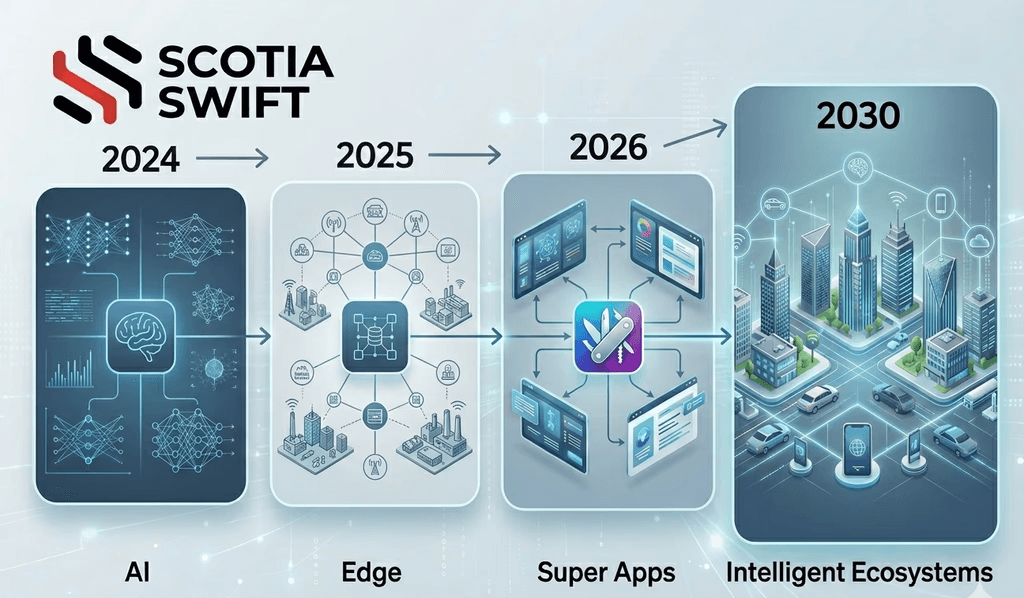
The top app development trends dominating 2026 — AI integration, blockchain security, AR/VR immersion, and edge computing — are redefining how businesses design digital products.
Applications must now be:
· Smart
· Secure
· Scalable
· Immersive
· Performance-optimized
Organizations that embrace these technologies position themselves for higher ROI, improved customer loyalty, and long-term competitive advantage.
The future belongs to businesses that invest in innovation today.
Scotia Swift
Website | Instagram | Facebook | Whatsapp |
Build Smarter App